Face treatments · Hyperpigmentation

Pigmentation spots and chloasma (melasma): reading the pigmentation before stepping in.

The body is marked by spots of irregular shapes and colours. Whatever your age, and whether your complexion is pale or dark, you are not safe from hyperpigmentation. At Photoderma, we start by identifying the origin of the pigmentation — hormonal, solar, genetic, post-inflammatory or medication-related — before settling on a protocol.

  • Three typesMelasma · Freckles · Lentigines
  • Five known originsHormones · Sun · Genetics · Trauma · Medication
  • Three related protocolsIPL · Alexandrite · AHA/BHA peel
  • All phototypesPale · medium · dark complexion
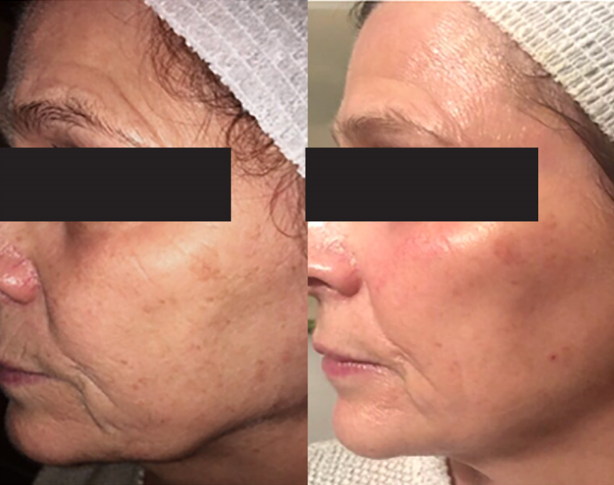
Close-up observation of skin pigmentation at the Photoderma clinic in Laval before defining a protocol
Reading pigmentation · in-clinic pre-evaluation in Laval.

The different spot types

What are the main types of pigmentation spots?

The clinical source distinguishes three main families. Some spots are present from birth, others appear over time — sun exposure in the lead. Recognizing them is the first step in choosing the right protocol.

Type 01

Mask of pregnancy or chloasma (melasma)

Known by the scientific name chloasma, the mask of pregnancy is a brownish to greyish pigmentation located on the face. It results from the increased hormonal activity during pregnancy. It can also appear with certain hormonal treatments and persist beyond childbirth.

  • Face
  • Hormonal
  • Brown to greyish

Type 02

Freckles or sun spots

They most often show up during childhood. They have no relief and appear more frequently in people with a very fair complexion and blond or red hair. A distinguishing sign: they tend to appear or darken after sun exposure.

  • Childhood
  • No relief
  • Fair complexion

Type 03

Age spots or lentigines

Also called "brown spots", they appear mainly around the forties after long sun exposure, specifically to ultraviolet rays. They can also show up as early as the thirties if the skin was not adequately protected.

  • From the thirties
  • Cumulative UV
  • Dark brown

In practice, several types can coexist on the same face. The in-clinic assessment clarifies the share of each before choosing a suitable protocol.

Understanding pigmentation

What is the origin of pigmentation spots?

Several causes often add up in the same person. Recognizing them helps rule out some protocols — such as those that reactivate melanogenesis on hormonally unstable skin — and select the right ones.

  1. 01

    Hormonal variations

    Pregnancy, contraception, perimenopause or hormonal treatments stimulate melanogenesis. This is the typical path of chloasma, which calls for caution and hormonal stabilization before any light-based intervention.

  2. 02

    Genetic predispositions

    Some families show more reactive pigmentation from childhood: freckles, pigmented nevi. The phototype directly influences the choice of protocol and intensity.

  3. 03

    Excessive sun exposure

    The most common cause of lentigines. Ultraviolet rays accumulated from the thirties onwards set in the brown spots of the face, décolleté and hands. Photoprotection remains the cornerstone of follow-up.

  4. 04

    Skin trauma

    Inflammatory acne, scratches, burns, poorly healed aesthetic procedures: the skin can respond with post-inflammatory hyperpigmentation, especially on darker phototypes.

  5. 05

    Taking medication

    Some photosensitizing treatments can bring up or reinforce spots. Listing your medications during the consultation helps rule out this hypothesis or adjust the schedule of care.

Treatments related to this one

How can spots caused by time or the sun be removed?

The clinical file links the treatment of hyperpigmentation to three protocols — to be considered alone or in sequence, after a consultation evaluation.

Pulsed light · dermal surface

Photorejuvenation / IPL

Intense pulsed light targets excess melanin and evens out the complexion. Often chosen as a first-line option for solar lentigines and diffuse pigmentation irregularities on the face, décolleté and hands.

Read the IPL page

Medical laser · targeted lesions

Alexandrite laser

A wavelength dedicated to pigmented targets. Useful on certain well-defined brown spots and on precise epidermal lesions. The choice depends on the phototype and the exact nature of the pigmentation.

Read the Alexandrite page

Chemical exfoliation

AHA / BHA Peel

Fruit acids (AHA) and beta-hydroxy acids (BHA) gently exfoliate pigmented superficial layers. Ideal for refining texture, reviving radiance and backing up a photoprotective routine.

Read the Peel page

Protocols are chosen after a full reading of the pigmentation: some types — notably active hormonal melasma — call for caution with light sources and an adapted schedule.

Questions before the consultation

Frequently asked questions · Pigmentation spots and melasma

What is melasma (chloasma) and why do we speak of a mask of pregnancy?

Chloasma, scientifically called melasma, is a brownish to greyish pigmentation located on the face. It most often results from increased hormonal activity during pregnancy, which is why it is popularly called a mask of pregnancy. The in-clinic evaluation clarifies the nature of the pigmentation before any protocol.

What are the main causes of pigmentation spots and hyperpigmentation?

Several causes combine: hormonal variations, genetic predispositions, excessive sun exposure, skin trauma and taking certain medications. UV exposure is the most frequent trigger after the forties, but poorly protected skin can already show brown spots as early as the thirties.

Are freckles and solar lentigines the same thing?

No. Freckles, or sun spots, appear from childhood, with no relief, mainly on very fair skin with blond or red hair; they darken in the sun. Lentigines, or age spots, show up rather around the forties after long exposure to ultraviolet rays.

Which protocols does the clinic offer to treat pigmentation spots?

The clinical file links the treatment of pigmentation spots and melasma to three protocols: IPL photorejuvenation, the Alexandrite laser and the AHA/BHA peel. Each option is considered after a consultation evaluation, based on the origin, depth and colour of the pigmentation.

Can one have pigmentation spots on dark skin or a pale complexion?

Yes. Whatever your age and whether your complexion is pale or dark, you are not safe from skin hyperpigmentation. Some spots are present from birth, others appear over time. The choice of protocol is always made based on your skin type during the consultation.

Next step · reading the pigmentation

Have your spots read before committing to a protocol.

During the consultation, the team clarifies the likely origin, depth and colour of your pigmentation, then presents the option best suited among IPL, the Alexandrite laser or the AHA/BHA peel. Follow-ups are booked by the end of the appointment.

Medicard financing available on all medico-aesthetic treatments · consultation included.