Morning
Cleanse without stripping
A gentle cleanser suited to your skin type removes overnight sebum without drying the skin. Skin that is stripped responds by producing even more sebum, which dilates the pores further.
Face treatments · Pores & skin texture
A pore is a cavity: everyone wants as few of them visible on the face as possible. These tiny openings on the skin's surface disturb a clear complexion, yet they also protect the skin and let it breathe. At Photoderma, three complementary protocols refine their appearance across the T-zone.
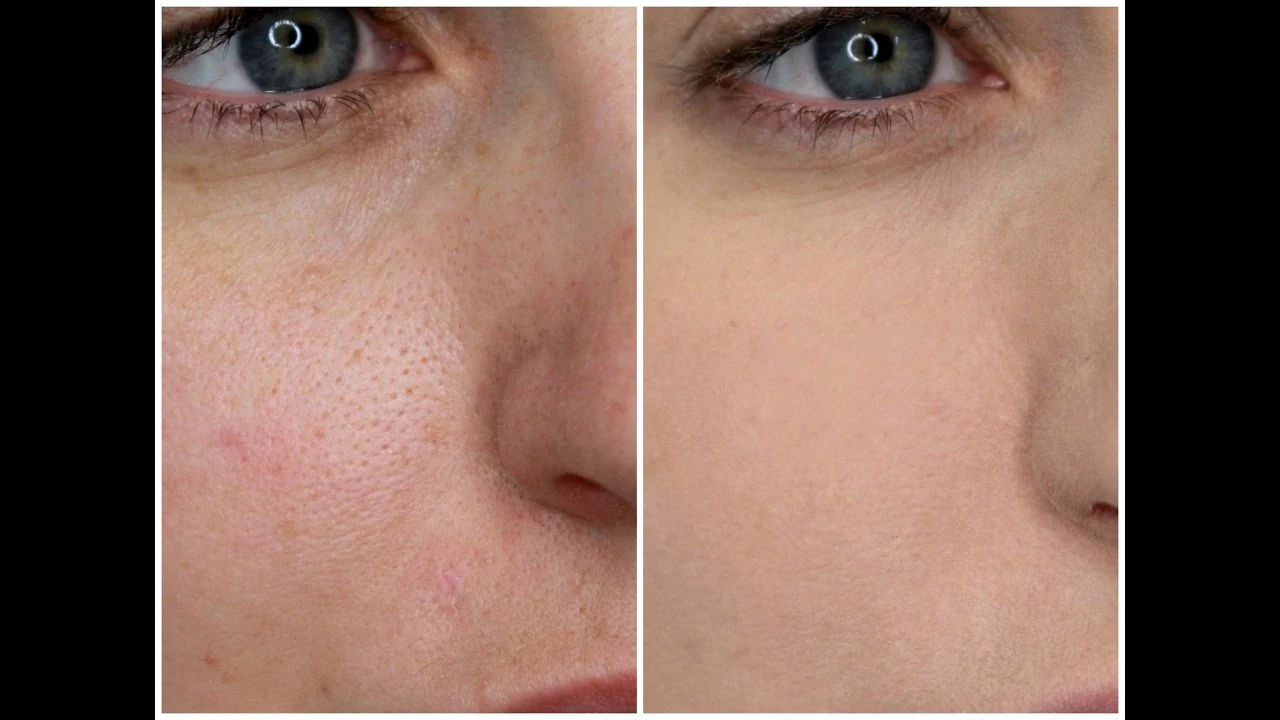
Understanding the pore
The clinical file reminds us that a pore is a cavity: it remains useful even when it is highly visible. It protects the surface, lets the skin breathe and channels sebum out. A pore is called "enlarged" when its opening widens under the pressure of sebum, dead cells and impurities that clog it.
A · Function
The pore is the exit channel for sebum and sweat. Even when "unwanted" visually, it supports the skin's breathing and barrier function. It cannot be removed; it can be tightened.
B · T-zone
This is the strip of the face where sebaceous-gland density is highest. The opening is naturally wider to let a heavier flow of sebum pass through, which also makes it more visible to the eye.
C · Clogging
Dead cells, bacteria and makeup residue build up at the pore's entrance. By sticking there, they stretch it and trap sebum inside: the pore appears both wider and darker.
D · Terrain
Pore size and sebaceous-gland activity are largely inherited. Ethnic origin plays a role too: some skin types are naturally more porous, independent of hygiene habits.
What causes skin pores to dilate?
The clinical file names five triggers. Each acts differently on sebum or on the pore's structure; often two or three are present at the same time.
01
Oily skin naturally produces more sebum. The pilosebaceous channel stays constantly full, widens mechanically and leaves more visible marks on the surface, especially in the centre of the face.
02
Over time, the dermis loses collagen and elastin. Skin holds less firmly around the pore; the opening sags and looks wider even when sebum production itself is decreasing.
03
Hot ambient temperatures stimulate sweat and sebum. Mixed together, they saturate the channel and stretch it. That's why pores appear more visible in late summer or after prolonged exertion.
04
Overly occlusive foundations, comedogenic textures and badly chosen creams clog the pore's entrance. The opening fills, widens, and the complexion loses clarity. The routine is reviewed at the first evaluation.
05
Neglected makeup removal, smoking, imbalanced diet, short sleep: each increases sebaceous activity and weakens the skin wall. Their combination can usually be read on the T-zone texture.
The issue also intensifies at major stages of the hormonal cycle — puberty, menopause — which strongly modulate sebum production. These windows are prepared for with an adapted beauty routine.
Before any treatment room
The clinical file states it clearly: enlarged pores can be prevented with a beauty routine built around quality products suited to your skin type. The goal of the routine: control sebum and tighten the pore wall.
Morning
A gentle cleanser suited to your skin type removes overnight sebum without drying the skin. Skin that is stripped responds by producing even more sebum, which dilates the pores further.
Day
A lightweight non-comedogenic cream and daily sun protection preserve the firmness of the dermis around the pore. Supple skin holds the shape of the opening better.
Evening
A double cleanse removes makeup, pollution and sebum residues. It is the step that most limits pore clogging during the night, when the skin regenerates.
Weekly
A gentle chemical exfoliation (AHA or BHA) lifts dead cells at the pore's entrance without aggressing it. It keeps the channel clear and the complexion fresher between professional sessions.
Lifestyle
A balanced diet, enough hydration, limited smoking and regular sleep all modulate sebum production. These levers cited in clinic always accompany the in-room protocols.
Critical season
The source file flags late summer as a time when pores clog easily. An evaluation at the start of autumn makes it possible to adjust skincare before summer's marks settle into the texture.
Treatments related to this one
The Photoderma file names three protocols directly linked to enlarged pores: mesotherapy/microneedling, AHA/BHA peel and microdermabrasion. They act at different depths and are often combined throughout a treatment plan.
Controlled micro-perforations stimulate the production of collagen and elastin deep in the dermis, then deliver targeted active ingredients (hyaluronic acid, peptides, vitamins). The dermis regains tone around the pore, which tightens durably.
Preferred when skin laxity accentuates pore openness across the T-zone.
See the Mesotherapy / Microneedling pageAHA acids work on the surface, BHAs penetrate the pore and dissolve excess sebum. Run as a course, the peel refines texture, lightens settled blackheads and reduces how often pores clog.
Preferred when pores are clogged, complexion is dull or texture is uneven.
See the AHA / BHA Peel pageVery gentle mechanical sanding using crystals or a diamond tip removes the superficial horny layer and the impurities built up at the pore's entrance. The complexion looks clearer immediately and the skin absorbs follow-up treatments better.
Preferred when a quick visible improvement is wanted or when preparing for a peel.
See the Microdermabrasion pageAn experienced technician gives you all the information needed on our different treatments. The order and combination depend on your skin type, your age and the season when the treatment plan begins.
Before you book
The T-zone — forehead, nose, chin — holds the highest density of sebaceous glands on the face. This is where the skin produces the most sebum, and also where dead cells and impurities build up most easily. Oily and combination skin types are the most exposed.
No. Pores are necessary openings: they protect the skin's surface and let it breathe. The realistic clinical goal is to tighten them, even out texture and control sebum production so that they look less visible to the eye.
Two moments come back in the clinical file: hormonal-cycle periods (puberty, menopause) and late summer, when pores clog easily from sweat and excess sebum. The beauty routine is then adapted to anticipate these windows.
The clinic's file lists three direct protocols: mesotherapy/microneedling to restart collagen, the AHA/BHA peel to exfoliate and dissolve sebum, and microdermabrasion to mechanically smooth the surface. An experienced technician defines the sequence.
An experienced technician gives you all the information needed on each option during the evaluation. Medicard financing is available on all medico-aesthetic treatments, over 6 or 12 months, with no initial fee and typically a same-day response.
Next step · reading skin texture
The consultation at Photoderma begins with reading the skin texture: pore density, excess sebum, visible clogging. The team then picks the right sequence — microdermabrasion for an immediate result, AHA/BHA peel for the routine, mesotherapy/microneedling for the long term. Medicard financing available on all medico-aesthetic treatments.
Skin texture evaluation by appointment · Photoderma clinic, 4672 Blvd. Saint-Martin Ouest, Laval, Québec H7T 2X9 · ste-dorothee@photoderma.ca