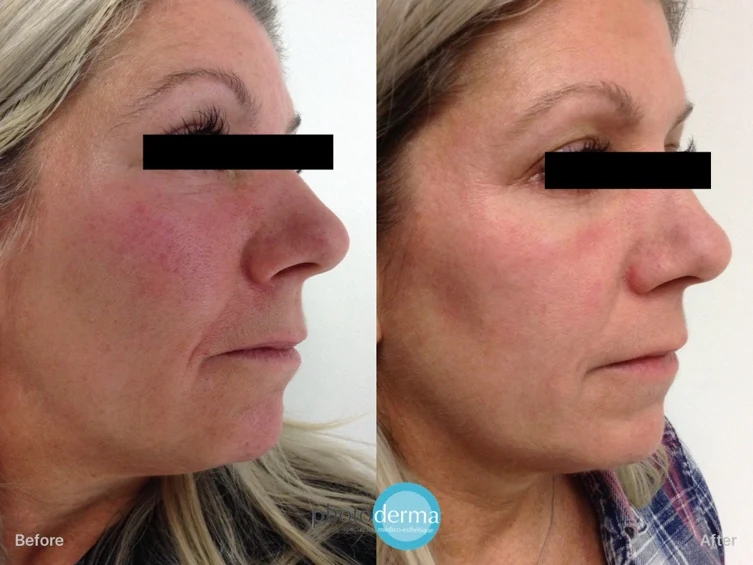
Face treatments · Vascular redness

What is the difference between couperose and rosacea?

Couperose is a network of small dilated blood vessels visible on the cheeks, nose, forehead, or chin, accompanied by redness and sometimes a sensation of heat. Rosacea is a chronic inflammatory skin condition of the face — it affects 2% to 3% of adults — with vascular dilation, hot flushes, and sometimes small pimples.

At Photoderma, three protocols address this dual vascular and inflammatory concern: Intraceuticals treatments, IPL photorejuvenation, and thermocoagulation.

Intense pulsed light photorejuvenation protocol to treat couperose and facial redness at the Photoderma clinic in Laval
Photofacial protocol · targeting dilated capillaries on the cheeks and the sides of the nose.

Understanding the distinction

Two closely related manifestations, but not identical.

Both conditions share a visible signature — redness and vascular dilation — but their mechanisms differ. Comparing their features helps you remember the right protocol.

A · Vascular

Couperose

A chronic skin condition that shows up as redness, often accompanied by a sensation of heat, generally located on the cheeks, nose, forehead, and chin.

Main cause
Heredity, modulated by hormonal and environmental factors.
Typical signs
Small dilated blood vessels visible to the naked eye, persistent redness.
Affected areas
Cheeks (dominant), nose, forehead, chin.

B · Inflammatory

Rosacea

A chronic inflammatory condition of the face characterized by dilated blood vessels, redness, and hot flushes. Left untreated, it can worsen over time.

Prevalence
Affects 2% to 3% of adults.
Typical signs
Dilated vessels, redness, hot flushes, patches of very dehydrated skin, sometimes small red or white pimples.
Cause
Unknown to this day; no definitive cure exists.

In practice, one can mask the other: it is not uncommon for rosacea to start as a long-ignored couperose. The in-clinic assessment clarifies the nature of the condition before any protocol.

Everyday triggers

What makes facial redness worse?

The source fact sheet cites three major typical factors, to which personal contexts are added — alcohol, spicy meals, exertion, heated indoor air — identified during the assessment. Knowing them helps avoid them day to day.

  • Sun exposure

    Ultraviolet rays dilate vessels and weaken capillary walls. Daily broad-spectrum SPF 50 photoprotection limits the progression of couperose and rosacea flushes.

  • Temperature swings

    Moving from an overheated room to cold air — or the reverse — triggers reflex vasodilation. Québec winters, saunas, hammams, and very hot showers are among the habits to moderate.

  • Emotional factors

    Stress, strong emotion, stage fright: the rush of redness is also a neurovegetative response. Breathing techniques and sleep management usefully complement the in-clinic protocol.

Related treatments

How do we treat couperose and rosacea?

The Photoderma clinical fact sheet explicitly cites three protocols for effectively treating these two conditions. They can be combined or sequenced after reading the skin.

  1. 01

    Oxygenation and soothing

    Intraceuticals

    The Intraceuticals treatment infuses pure oxygen and a targeted serology into the skin. It soothes reactive redness, hydrates dehydrated patches associated with rosacea, and prepares the skin to better tolerate light-based sessions.

    Role: soothe · hydrate · strengthen the hydrolipidic film.

    Intraceuticals technology details
  2. 02

    Vascular light

    Photorejuvenation / IPL

    Intense pulsed light photofacial acts directly on dilated blood vessels: the energy is absorbed by hemoglobin, the capillaries close, and diffuse redness fades. Generally 1 to 3 sessions spaced 4 weeks apart, then an annual touch-up.

    Role: close diffuse capillaries · even out skin tone.

    Photorejuvenation / IPL fact sheet
  3. 03

    Visible capillaries

    Thermocoagulation

    For isolated, more pronounced vessels, thermocoagulation applies a precise thermal micro-pulse that coagulates the visible capillary. This approach usefully complements IPL when a few veinules persist after the light-based sessions.

    Role: treat visible vessels one by one.

    Thermocoagulation fact sheet

Before your consultation

Frequently asked questions · Couperose and rosacea

What is the difference between couperose and rosacea?

Couperose is a network of small dilated blood vessels, most often on the cheeks, that gives the skin a flushed look and a sensation of heat. Rosacea is a chronic inflammatory skin condition that affects 2% to 3% of adults, with dilated vessels, redness, hot flushes, dehydrated patches, and sometimes small pimples.

What triggers redness and hot flushes?

Three factors are cited as typical triggers: sun exposure, sudden changes in temperature, and emotional factors. The in-clinic assessment pinpoints personal contexts — exertion, spicy meals, alcohol, heated indoor air — to help avoid them day to day.

Can rosacea be cured for good?

The exact cause of rosacea remains unknown to this day and no definitive cure exists. Left untreated, it can worsen over time. The clinic's protocols aim to reduce the visible signs — redness, dilated vessels — and to space out flare-ups.

What treatments do you offer for couperose and rosacea?

At Photoderma, three protocols are offered: Intraceuticals treatments to soothe and oxygenate the skin, IPL photorejuvenation to close dilated blood vessels, and thermocoagulation for visible capillaries. The approach is combined based on the skin profile.

How many sessions are needed to see an improvement?

The number depends on how dense the visible vessels are and on the chosen approach. IPL is generally planned over one to three sessions spaced four weeks apart. An experienced technician will specify the schedule and the order of the protocols during the in-clinic assessment.

Next step · calming the redness

Have your redness read by an experienced technician.

The team maps your capillary network, clarifies any inflammatory component, and selects the right protocol — Intraceuticals to soothe, IPL to close dilated vessels, thermocoagulation for visible capillaries one by one. Medicard financing available on all medical-aesthetic treatments.

Photoderma clinic · Laval · Vascular assessment with no obligation — full contact details at the foot of the page.