Face treatments · Acne and blemishes

Nearly 20% of Canadians live with acne.

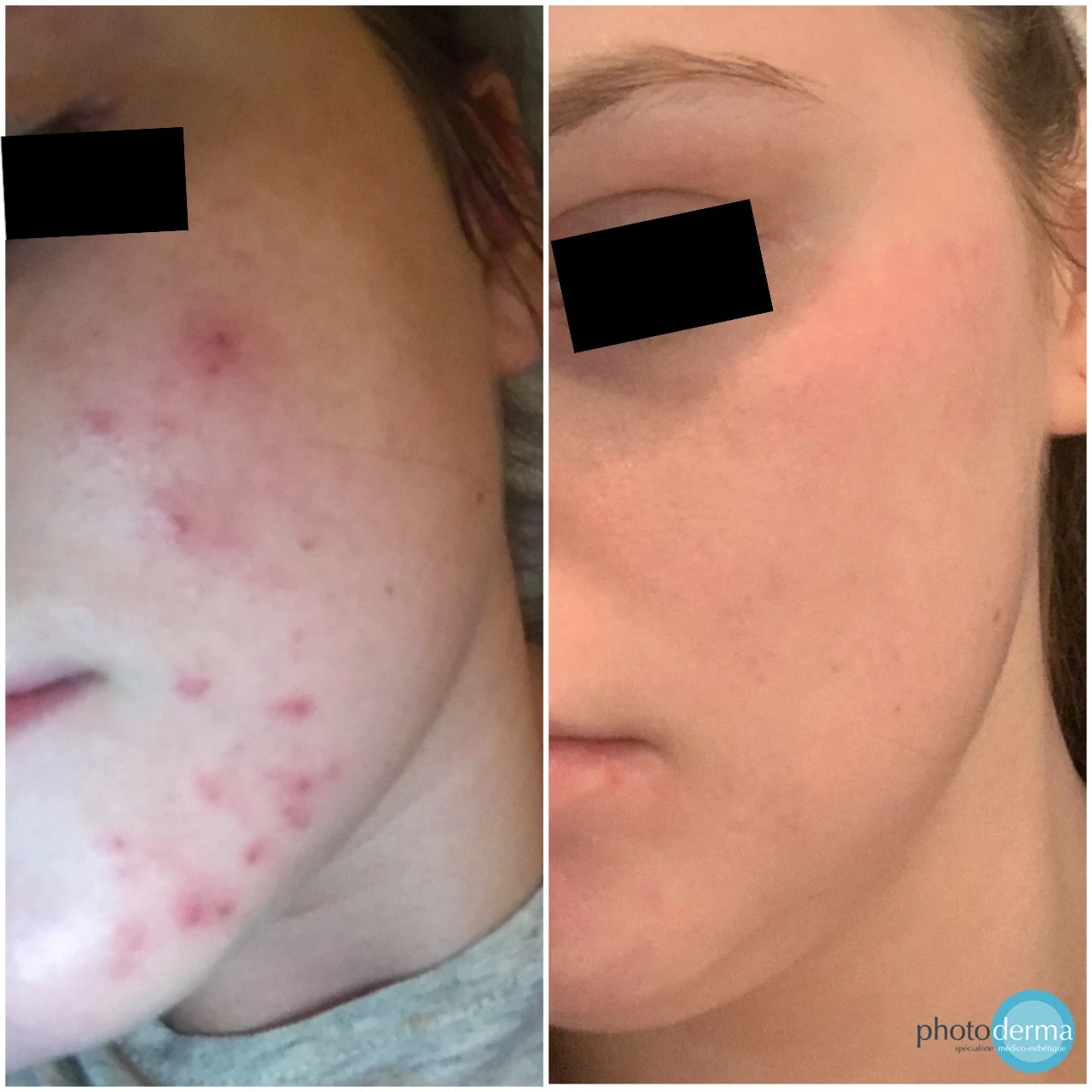
Nearly 20% of the Canadian population deals with acne: 90% of teenagers and about 25% of adults. The condition is largely beyond a person's control and can weigh heavily on self-esteem. At Photoderma, four protocols help bring it under control effectively.

Photograph of skin during a medical-aesthetic treatment at the Photoderma clinic, showing the preparation of an acne protocol
Preparing a combined protocol · sebum regulation and pore oxygenation.

Why skin breaks out

Clogged pores, excess sebum, bacteria starved of oxygen.

Acne concentrates where sebaceous gland density is high — the face, upper back, and chest. It results from increased sebum production. The bacterium Propionibacterium acnes lives in that sebum: when oxygen runs low, it proliferates and triggers breakouts and inflammation.

  1. 01 · Trigger

    Heredity, puberty, or any other hormonal imbalance increases sebum production. The condition is largely beyond voluntary control.

  2. 02 · Obstruction

    Sebum saturates the pilo-sebaceous canal. Pores become clogged and oxygen can no longer reach the surface of the follicle.

  3. 03 · Bacterial proliferation

    In the absence of oxygen, the bacterium Propionibacterium acnes multiplies in the sebum and causes breakouts and inflammation.

  4. 04 · Point of leverage

    Oxygenate the skin by unclogging the pores, then reduce sebum production: the bacteria no longer have an environment conducive to multiplying.

Aggravating factors

What causes acne?

The source fact sheet reminds us that the causes of acne are numerous and sometimes hard to pin down. Six of them come up most often during in-clinic assessments.

  • Hormonal variations

    Puberty, menstrual cycle, pregnancy, discontinuing contraception, polycystic ovary syndrome: androgen spikes stimulate the sebaceous glands and trigger breakouts.

  • Diet

    High glycemic loads and certain dairy products are regularly flagged as modulating factors. The assessment pinpoints what in your daily routine is worth adjusting.

  • Lifestyle

    Short sleep, chronic stress, smoking: a generally inflammatory baseline encourages breakouts. We address these levers alongside the in-cabin treatments.

  • Beauty products, fragrance

    Comedogenic textures, overly occlusive foundations, and certain alcohol-based perfumes irritate the skin and clog pores. We review your routine with you at the first consultation.

  • Certain medications

    Corticosteroids, hormones, lithium, and some epilepsy treatments can trigger or worsen breakouts. We work around your medical prescription without ever modifying it.

  • Perspiration

    Sweat mixed with sebum clogs the follicles — especially on the forehead, back, and chest. Gentle cleansing after exercise limits so-called "mechanical" breakouts.

Related treatments

How is acne managed in the clinic?

The Photoderma clinical fact sheet lists four complementary protocols. The order and combination depend on the phototype, how long the acne has been present, and whether scars are present.

A · Unclogging

Facial

Deep cleansing, extraction of comedones, and application of a soothing treatment. This is the foundation of the protocol: reopen the pilo-sebaceous canal to let oxygen through and prepare the skin for the technical sessions.

Role: unclog pores, soothe visible inflammation.

Facial fact sheet

B · Targeted exfoliation

AHA / BHA peel

AHA acids work on the surface, while BHAs penetrate the pore and dissolve excess sebum. The sequence refines the texture, fades post-inflammatory marks, and reduces how often breakouts occur.

Role: regulate sebum, smooth texture, soften brown marks.

AHA / BHA peel fact sheet

C · Antibacterial light

Photorejuvenation / IPL

Intense pulsed light targets P. acnes bacteria and residual redness. It calms active inflammatory patches while evening out skin tone — useful when acne leaves lasting redness.

Role: reduce bacterial load, fade post-breakout redness.

Photorejuvenation / IPL fact sheet

D · Deep regeneration

Mesotherapy / Microneedling

The micro-needles induce neocollagenesis and help targeted actives — niacinamide, salicylic acid, zinc — penetrate the skin. A key protocol for adult acne that leaves dilated pores and scars behind.

Role: restart collagen production, soften scars and dilated pores.

Mesotherapy / Microneedling fact sheet

Before your consultation

Frequently asked questions · Acne

What causes acne?

Acne is overwhelmingly triggered by heredity, puberty, or a hormonal imbalance. The bacterium Propionibacterium acnes multiplies in sebum when pores are clogged and oxygen is absent, which causes breakouts and inflammation.

How many people are affected by acne in Canada?

Nearly 20% of the Canadian population deals with acne. Prevalence is high among teenagers — around 90% — but it persists into adulthood, where close to 25% of adults still experience regular or residual breakouts.

Where does acne appear most often?

Acne develops where sebaceous gland density is highest. Three areas are mainly affected: the face (forehead, cheeks, chin), the upper back, and the chest. The protocol can therefore include, depending on the case, sessions for the face and the trunk.

How do your acne treatments work?

The first step is to oxygenate the skin by unclogging the pores. We then combine targeted treatments — facial, AHA/BHA peel, IPL photorejuvenation, or microneedling — with active-ingredient products that slow sebum production to reduce bacterial proliferation.

Is adult acne treated differently?

Yes. Adult acne often comes with older scars, dilated pores, and more reactive skin. The technician generally combines regulating work (peel, IPL) and regenerating work (microneedling) to treat the current breakout and the marks left by past flare-ups.

Next step · getting clear skin back

Have your acne assessed by an experienced technician.

The consultation reads your skin zone by zone, documents the hormonal component, scars, and products in use, then selects the right sequence — facial to unclog, AHA/BHA peel to regulate, IPL to calm, microneedling to regenerate. Medicard financing available on all medical-aesthetic treatments.

Acne assessment by appointment · Photoderma clinic, 4672 Blvd. Saint-Martin Ouest, Laval, Québec H7T 2X9 · ste-dorothee@photoderma.ca